

The French and Romanian system
Growing up between two cultures, from French to English and Romanian
Prepare French system qualifications
The themes of the exhibition
French, English and Romanian every day, starting from nursery school.
The transition into learning, from nursery to reception.
Philosophy — critical thinking.
Local culture.
Growing up between two cultures: a real asset
Being educated in a French lycee in Romania offers pupils the richness of a dual culture. On a daily basis, they evolve in an environment where French and Romanian languages, traditions and references meet. This dual identity fosters open-mindedness, curiosity and the ability to understand different points of view.
By developing an in-depth understanding of the host country's culture whilst benefiting from the excellence of the French education system, pupils build a plural identity and acquire valuable intercultural skills. They learn to adapt to a variety of contexts, communicate with ease in multiple languages and navigate an increasingly international world with confidence.
This dual culture thus constitutes a major asset for their personal, academic and professional success, in France, in Romania and all over the world.
A plurilingual pathway right from nursery school
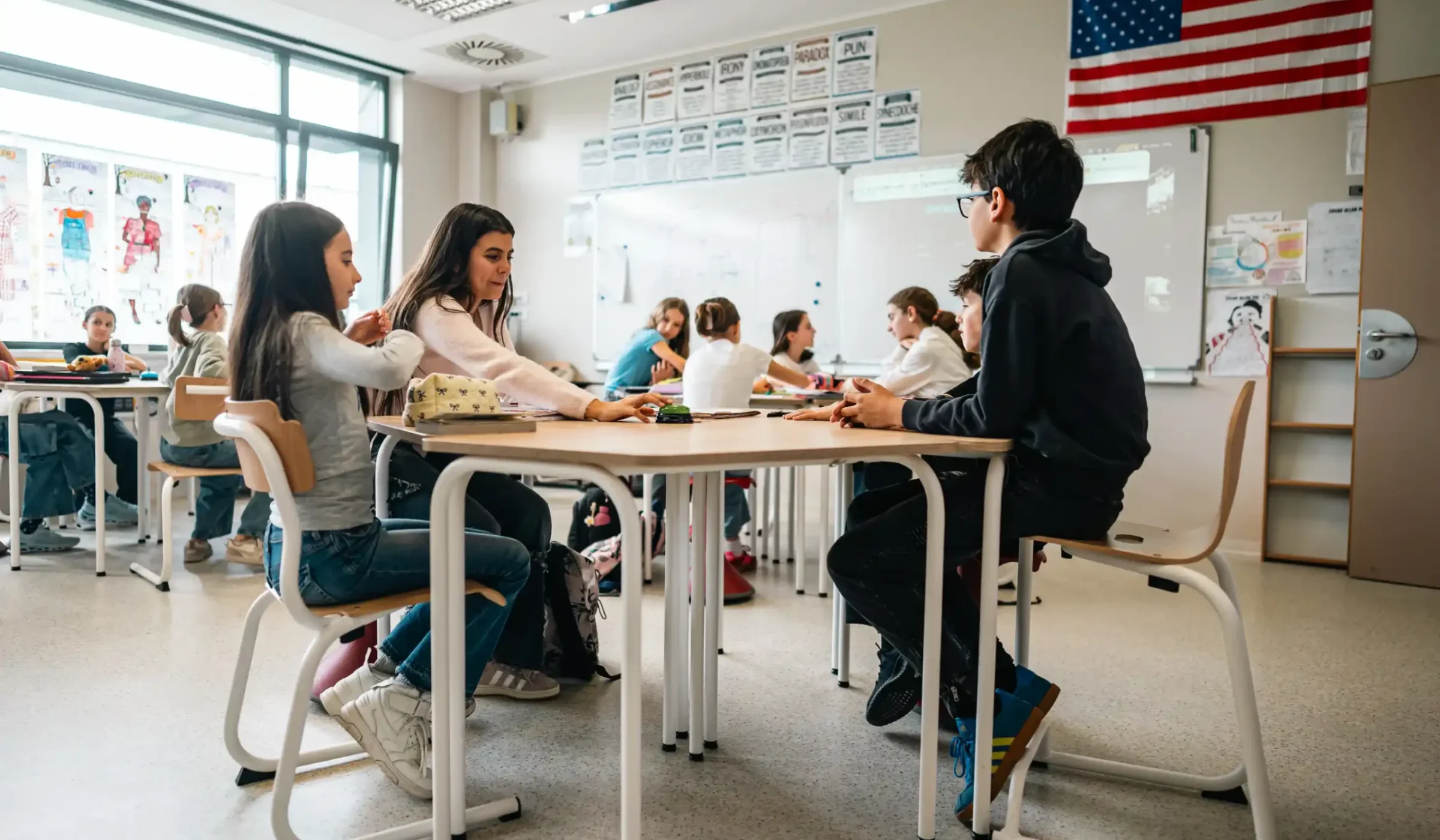
In our French international school, plurilingualism forms a strong pillar of the educational project. From nursery school onwards, pupils develop their language skills in an environment where French, English and Romanian naturally sit alongside one another. This approach is based on research showing that between the ages of three and five, children have a great capacity to perceive, reproduce and memorise the sounds, rhythms and structures of languages.
Early language learning encourages cultural openness, curiosity and the development of phonological skills (listening, intonation, rhythm, pronunciation), which also contribute to a better mastery of French. Pupils thus discover linguistic diversity and understand very early on that communication can be expressed in several languages.
English is offered through short, regular sessions, adapted to the pace of young children. Through songs, games, nursery rhymes and communication activities, pupils become familiar with the sounds of the language and gradually acquire an initial vocabulary.
Romanian, the language of the host country and the mother tongue of a large proportion of pupils, also occupies an essential place. Two consecutive hours per week are devoted to consolidation and learning for all pupils. These sessions make it possible to reinforce the mother tongue for Romanian-speaking pupils, develop language skills across various learning areas and encourage exchanges between pupils with varied linguistic backgrounds.
Language learning continues and is reinforced in primary school.
Pupils benefit from two weekly sessions dedicated to language learning, as well as a CLIL (Content and Language Integrated Learning) session, during which a subject is taught in English. This approach increases the time exposed to the language and encourages its use in authentic situations.
Teaching is organised into two groups: one for Romanian-speaking pupils and one for non-Romanian-speaking pupils. This differentiation allows each pupil to progress according to their needs, whether that involves strengthening a mother tongue or gradually acquiring the language of the host country.
Certifications
Language certifications
This plurilingual pathway supports pupils throughout their schooling. It values French, the language of schooling, English, the international language of communication, and Romanian, the language of the host country and of many pupils in the school. This linguistic richness promotes academic success, openness to the world and the development of genuine plurilingual and intercultural competence.
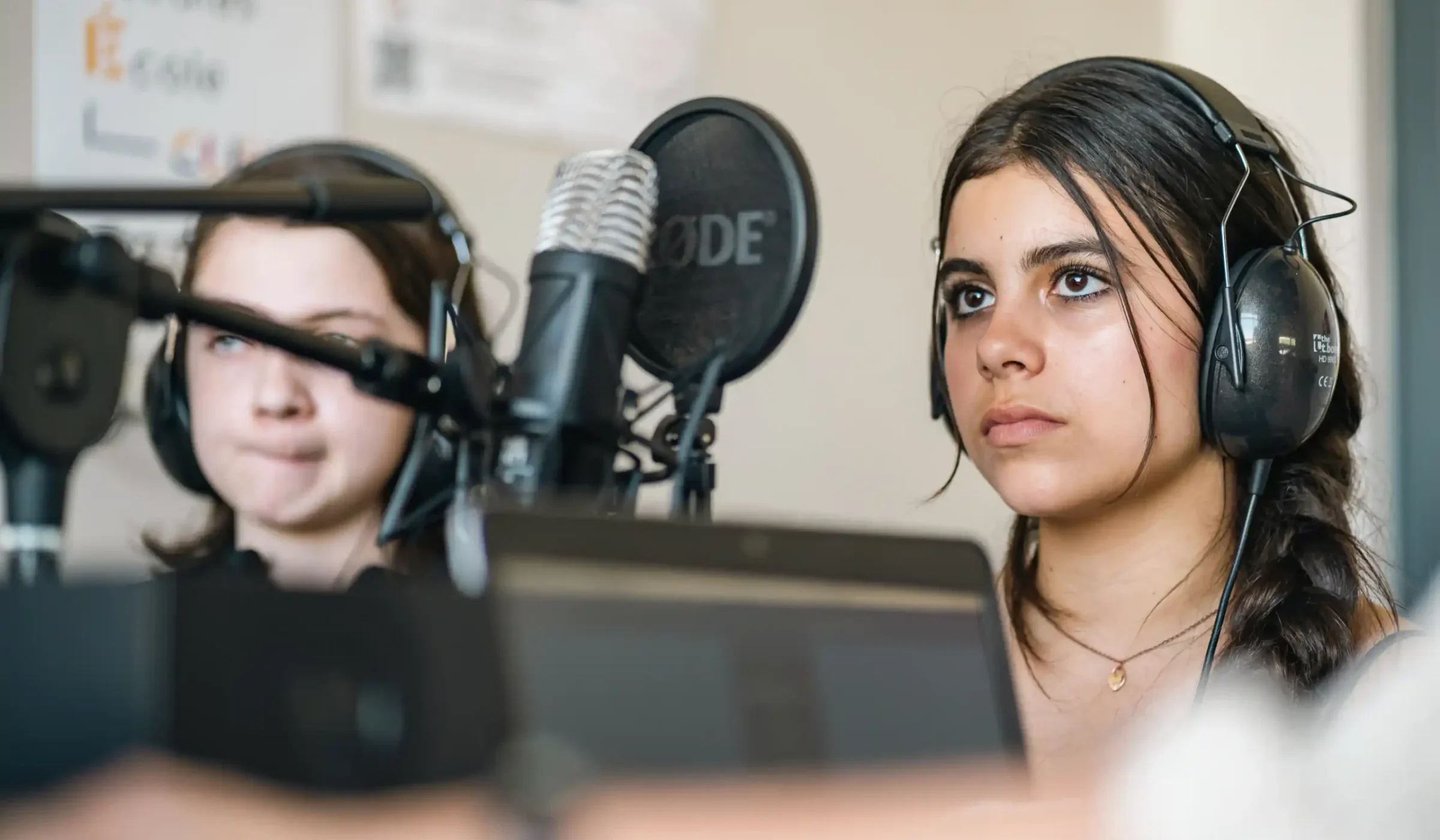
In order to showcase acquired skills and prepare pupils for international standards, the LFADN also offers preparation and sitting for Cambridge English and DELF certifications, in partnership with the British Council and the French Institute in Romania. These certifications provide official recognition of language proficiency levels and are an asset for further study both in France and internationally.