Primary school supports every pupil in acquiring fundamental knowledge, developing their independence and progressively building their critical thinking skills.
It is organised into two cycles in accordance with the French Ministry of National Education curricula:
Cycle 2
Key learning stage
From Year 1 to Year 3.
Cycle 3
Consolidation cycle
From Year 5 to Year 7, ensuring educational continuity between primary school and secondary school.
Our school offers a demanding, structured and supportive education that puts the pupil at the heart of their learning and fosters the joy of learning, reading, exploring, creating and understanding the world.
17
classes in primary school, with about 18 pupils in Year 2 (CP) and 24 pupils from Year 3 (CE1) to Year 6 (CM2)
Curriculum and teaching
Mastering core knowledge
French: read, write, understand and speak
Cycle 2
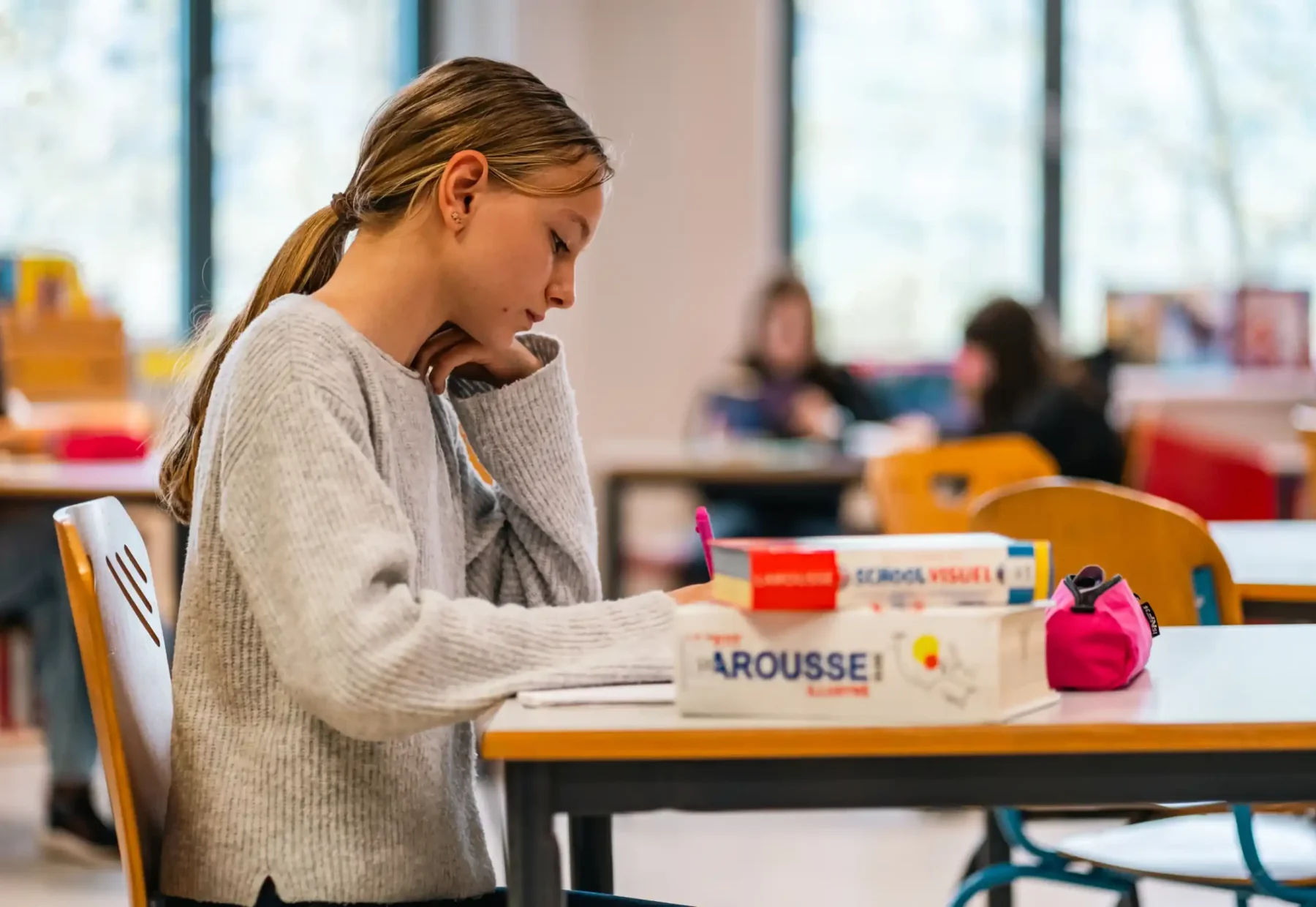
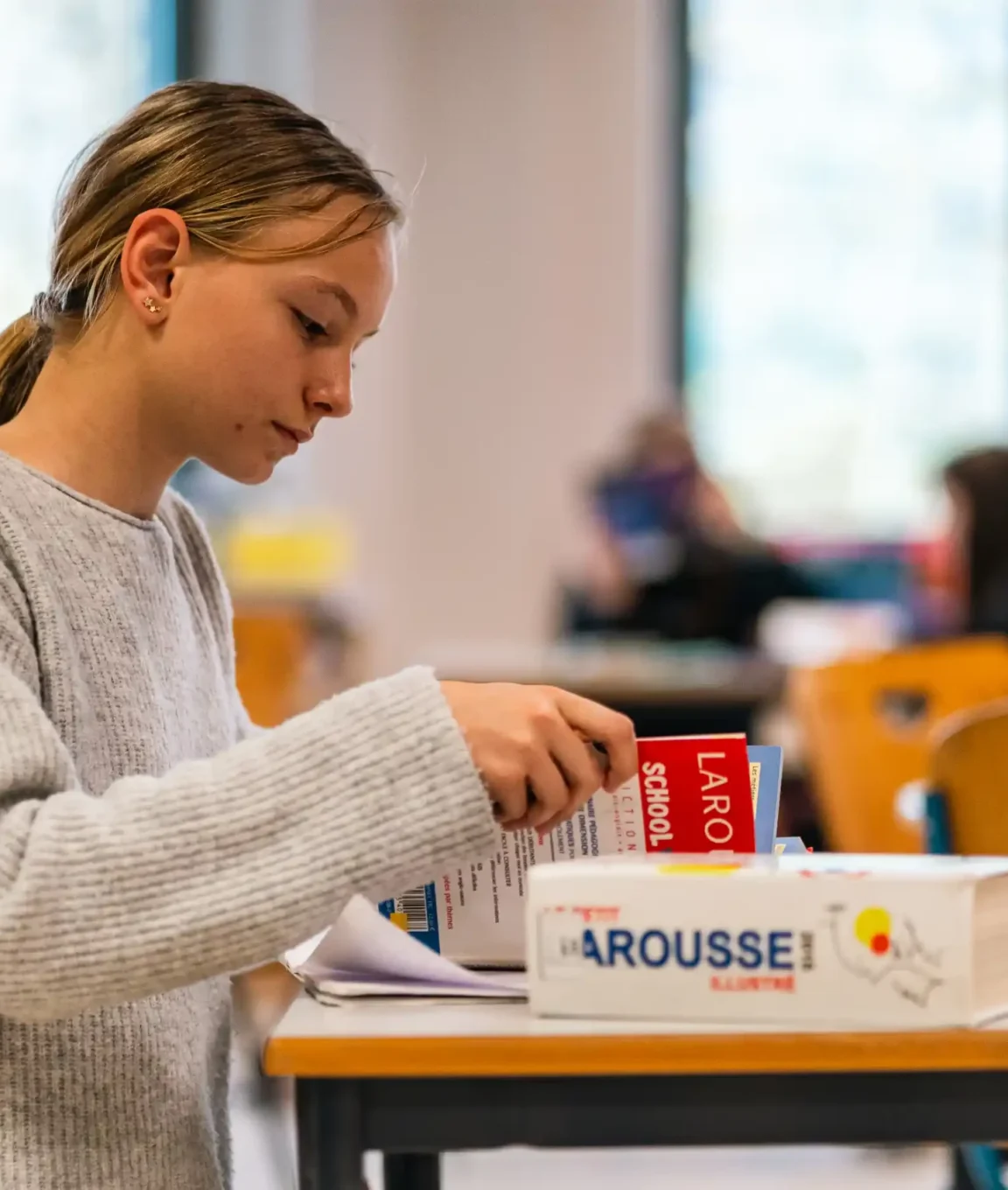
In Key Stage 1, pupils build the foundations of the French language in speaking and writing through explicit and progressive teaching. Reading, writing, vocabulary, grammar and spoken expression are worked on daily in order to develop comprehension, reading fluency and a love of reading.
Cycle 3
In Key Stage 3, these learning experiences are consolidated and developed in order to gradually lead the pupil towards independence. Pupils learn to understand and interpret a variety of texts, argue, organise their thinking and produce coherent pieces of writing. Expressive reading, debates, writing projects and the discovery of literary and artistic works occupy an important place in learning.
Mathematics: manipulate, reason, solve
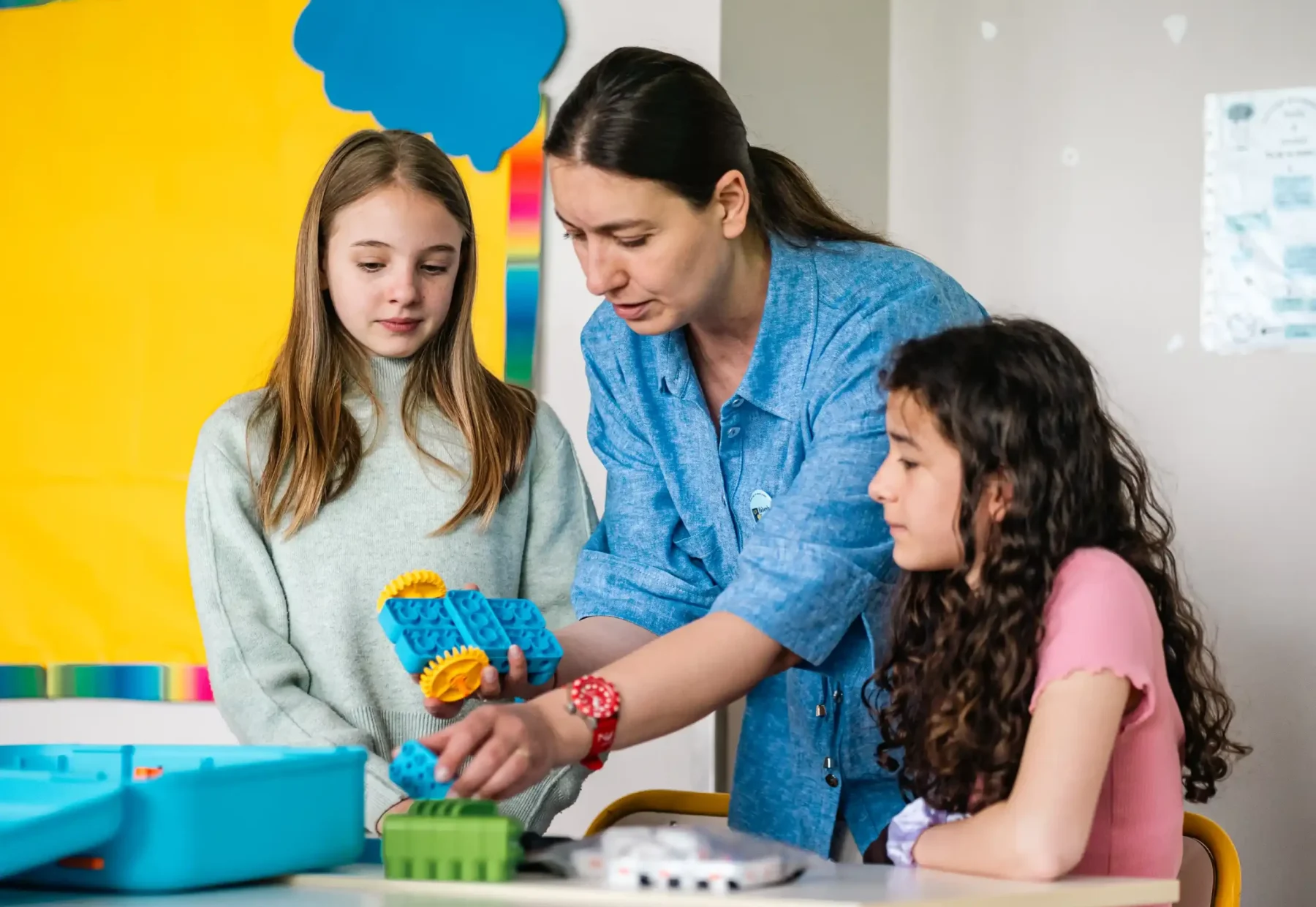
Mathematics teaching is based on a progressive approach moving from the concrete to the abstract. Pupils manipulate, experiment, represent and then verbalise mathematical concepts in order to build secure knowledge.
Cycle 2
In Key Stage 1, priority is given to number, mental and written calculation, problem-solving, quantities and measures, as well as geometry. Pupils develop automaticity, learn to explain their methods and compare different strategies.
Cycle 3
At Key Stage 2, pupils deepen their knowledge of arithmetic, fractions, geometry, data handling and logical reasoning. Research and problem-solving activities develop independence, critical thinking and self-confidence.
Discover, understand and create
In addition to the core subjects, pupils develop their curiosity, creativity and general knowledge through the other areas of the curriculum.
Cycle 2
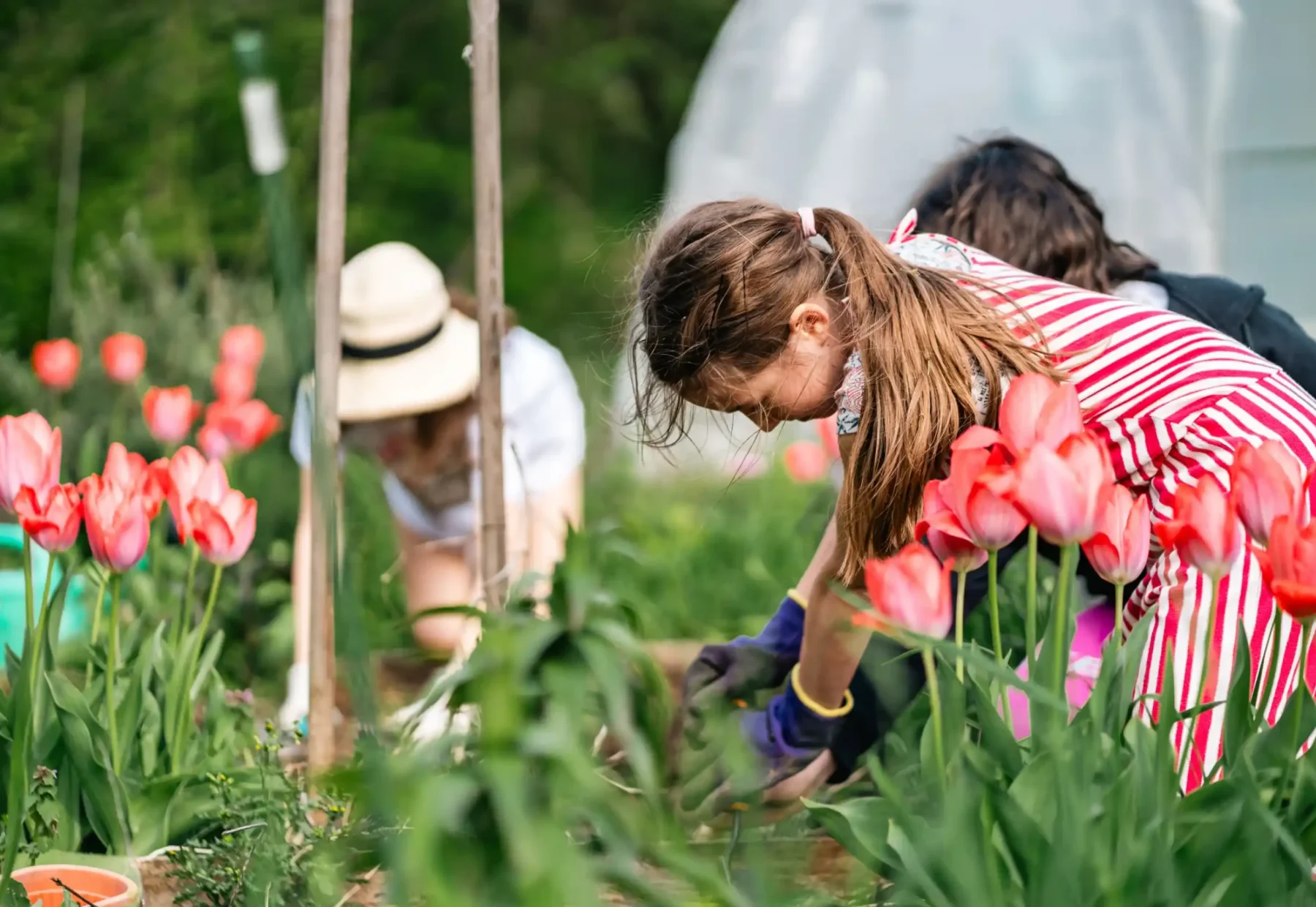
At Key Stage 1, pupils discover the world around them through observation, experimentation and early scientific approaches. They also develop their artistic sensibility in art and design and music, whilst strengthening their motor skills and spirit of cooperation in physical education and sport.
Cycle 3
At Key Stage 2, pupils deepen their knowledge of history, geography, science and technology. They build cultural, historical and spatial reference points, develop a scientific approach based on observation and experimentation, and enrich their artistic culture. Physical education and sports contribute to team spirit, respect for rules and health education.
All of these teachings contribute to the education of pupils who are curious, well-read, open-minded and capable of developing their critical thinking.
the development of creativity and critical thinking
Each child's progress is supported with high standards and care in order to strengthen self-confidence and the joy of learning.
Opening
Linguistic and cultural openness
Modern language learning occupies an important place in our international school.
From nursery school onwards, pupils are introduced to the language and culture of the host country. In primary school, the teaching of Romanian and English is provided by specialist teachers from year one (CP).
This course promotes cultural awareness, communication, and an understanding of the contemporary world.
3
Romanian language teachers
4
English language teachers
Adequate infrastructure and support
The school has modern equipment to support learning:
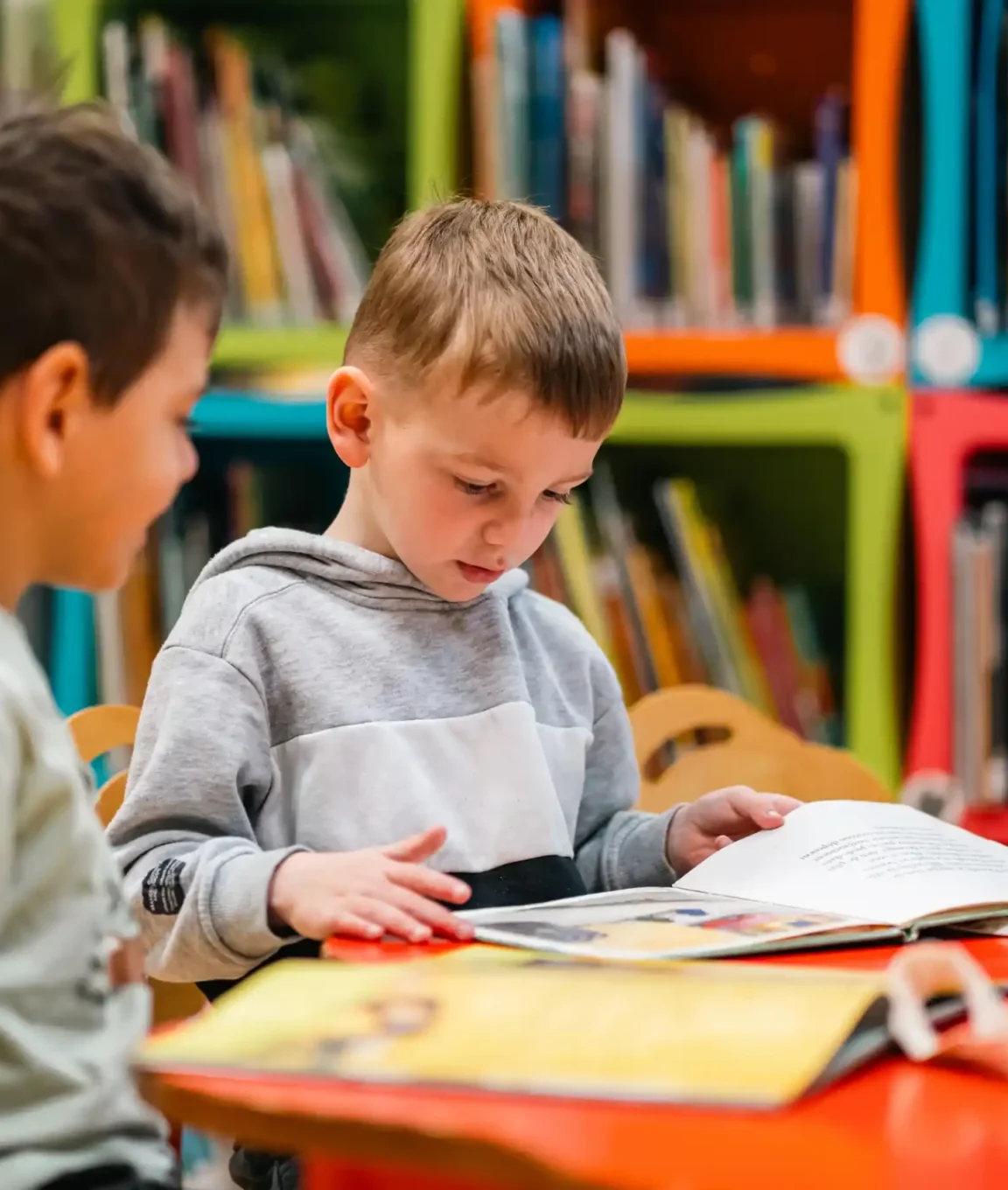
library / school library
digital equipment and interactive whiteboards
audiovisual equipment
accessible sports facilities
Portrait
«Every child learns at their own pace.»
What gives meaning to my profession is supporting them in their progression, helping them to develop their confidence and self-esteem, as well as their independence of thought, qualities that will stay with them throughout their life in a constantly evolving world.
Irina
Primary School Teacher · Year 2
11 years in teaching. After 5 years in nursery, next year will be my 6th year in Year 2.
Support
A relationship of trust with families
Because pupils' success relies on close collaboration between the school and families, we place vital importance on dialogue and co-education through:
information meetings (at least 1 at the beginning of each school year)
parents-teacher meetings
one-to-one appointments
regular educational monitoring
An inclusion hub with a coordinator, an educational psychologist, a supernumerary teacher and FLSco teachers allows for personalised support for every pupil.
Our school also pays particular attention to pupils whose mother tongue is not French through support in French as the language of schooling, allowing everyone to progress at their own pace and develop their confidence and independence.
Cross-phase activities enable a coordinated and smooth transition for primary school pupils.
A week
at primary school
Monday, Tuesday, Thursday and Friday
8:20
Entry to the premises
8:30
Start of lessons
3:30 pm
End of classes
3:30 pm › 5:30 pm
After-school care
On Wednesdays, school finishes at 12:00 and after-school club looks after the children from 12:00 to 17:30. After-school activities take place every day from 15:30 to 17:30, and on Wednesdays from 12:30 to 15:30.
In pictures
Elemental in pictures
From primary school to A-levels
Continuity of schooling up to final year (Terminale)
We use cookies to ensure that we give you the best experience on our website. If you continue to use this site we will assume that you are happy with it.